

The Right Path
CLIENT: SAYARA STRATEGIES & INTL GOVERNMENTS
PROJECT: ANTI-NARCOTICS & COMMUNITY EMPOWERMENT
SECTOR: AGRICULTURE & EDUCATION
LOCATION: USA X AFGHANISTAN
-
Sayara Strategies, responsible for implementation of international government sponsored philanthropic initiatives in developing countries, required an experienced producer and creative lead to support their team in Afghanistan, compromised mostly of local Afghanis using limited infrastructure and educational resources in the rebuilding region. The campaigns required an understanding of how to work within these limitations, with an existing local team, and how to design in a style that would fit in with aesthetics of Afghanistan's rural but developing population where illiteracy is the standard by which to communicate messages via design.
-
Morgan Kays, one of our Special Projects Producers, worked with Sayara Strategies in Afghanistan on a national campaign that required multiple media needs including branding. He helped streamline and elevate existing programs while developing more effective forms of communication with use of educational visuals, programming and storytelling. Working with our Creative Director, Katheryn Bwye, in Los Angeles, a logo was first developed, tested and approved by nationwide afghan citizen focus groups, as well as the international government programs that sponsored the campaign.
Morgan reformatted and produced a social welfare talk show on anti-narcotics and women’s empowerment that broadcast nationally. Most noted was the comic book series that was revamped with a two part series that introduced the first female afghan comic book superhero. Including a re-order of the female afghan superhero story, a total of over 1.4 million copies were distributed throughout Afghanistan.
How we orchestrated a locally powered, multimedia, national campaign for an illiterate population in rural Afghanistan.
SCOPE OF WORK
Strategy & Action Plans
Brand, Messaging & Identity Design
Video Production & TV Broadcast Series
Comic Book Production
Posters & Billboards
Mobile Theaters & Community Events
Training Manuals


LOCAL MENTORSHIP
As boots on the ground, our MENA Special Projects Director lead, mentored, and grew Sayara’s local production team. By streamlining production, elevating the quality of programs, we added value beyond numbers in terms of audience connection and team morale. Physical work included creating temporary office locations and set designs that inspired teams to have pride in the work they did.


DESIGNING FOR AN ILLITERATE DEMOGRAPHIC
Designing for the general public in Afghanistan meant "unlearning" all our usual aesthetics and really understanding the visual styling locals were accustomed to and understood. Because most of the target audiences were not formally educated–many completely illiterate–we had to be very literal with our design work. We could not be abstract, contemporary or futuristic, as this would not convey the messaging for all components of the campaign. The logo had to be literal, almost childlike, & minimally stylistic.
After conducting local market research and focus group studies on various logo directions, this was the final selection. Audiences liked that they saw a family with a sun, but also were attracted to the secondary image of a smiley face. This would not work in the USA, but it was considered relatable, understandable, trustworthy, and all encompassing for the region and the programs under the campaign umbrella.
The logo was used across all media including print, billboard, broadcast tv, mobile theater and more. Since all campaign work was distributed in the two most popular dialects in Afghanistan, the logo had one version in the dialect of Dari and another in Pashtu.

COMIC BOOKS
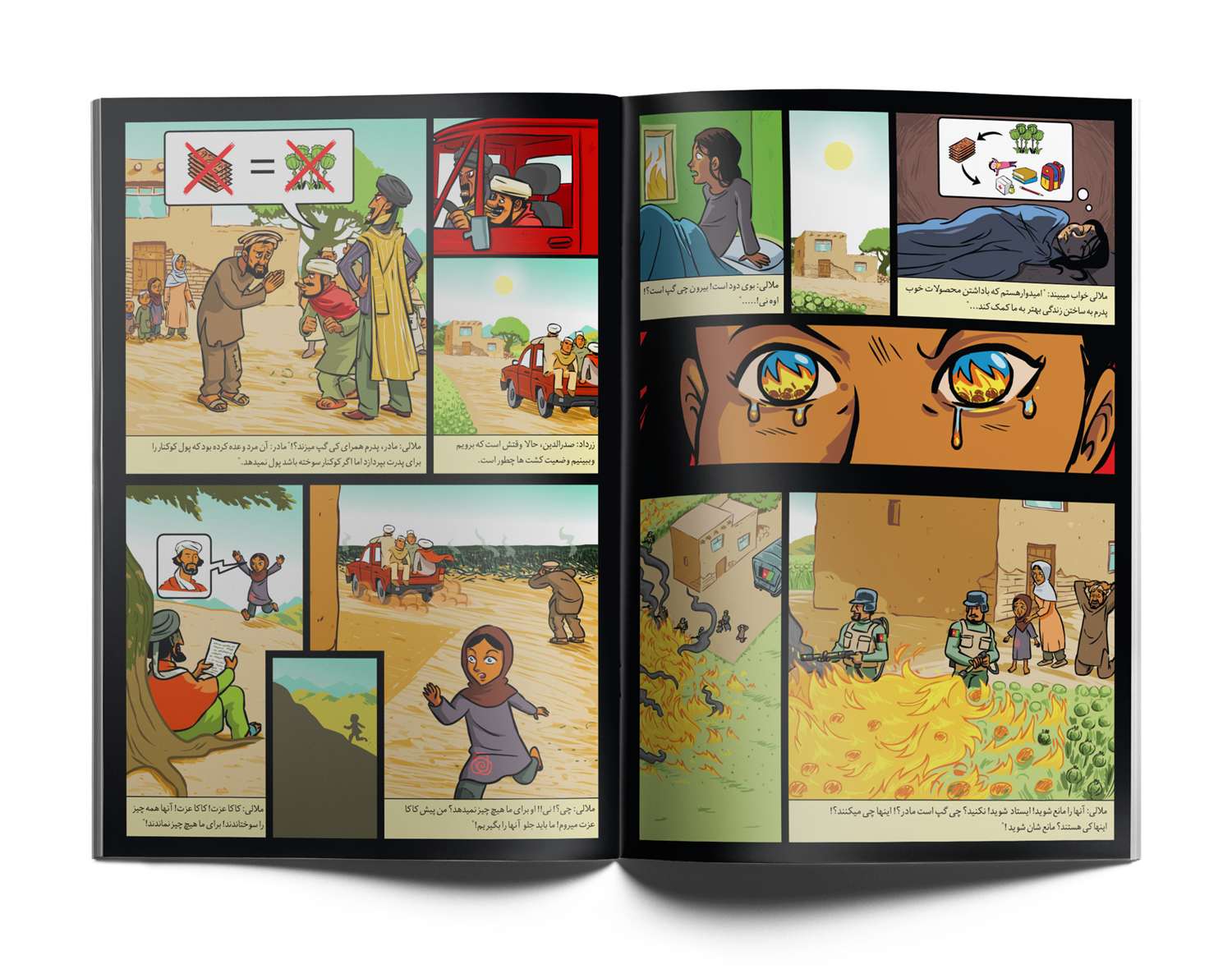
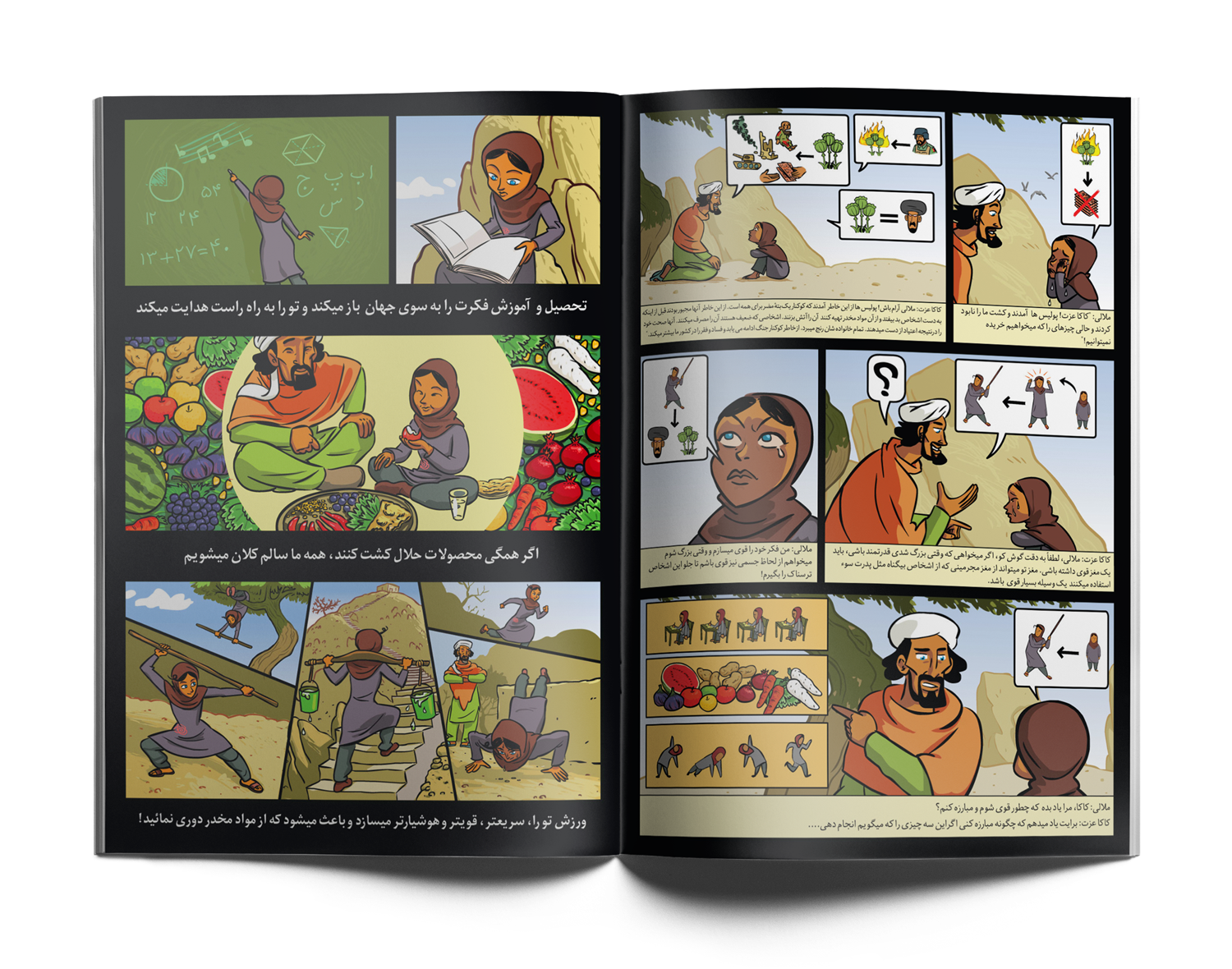
The comic book development was a delicate balance between respecting cultural norms of behavior while also trying to push the envelope of style, characters, and storytelling. National distribution required incorporating messages suited for all regions in Afghanistan while translating these messages effectively for multiple dialects, and mainly, an illiterate audience. All of this was combined to craft a very specific visual delivery that resonated with a unique audience. This project included a local team, while also incorporating international assistance from Europe and India.
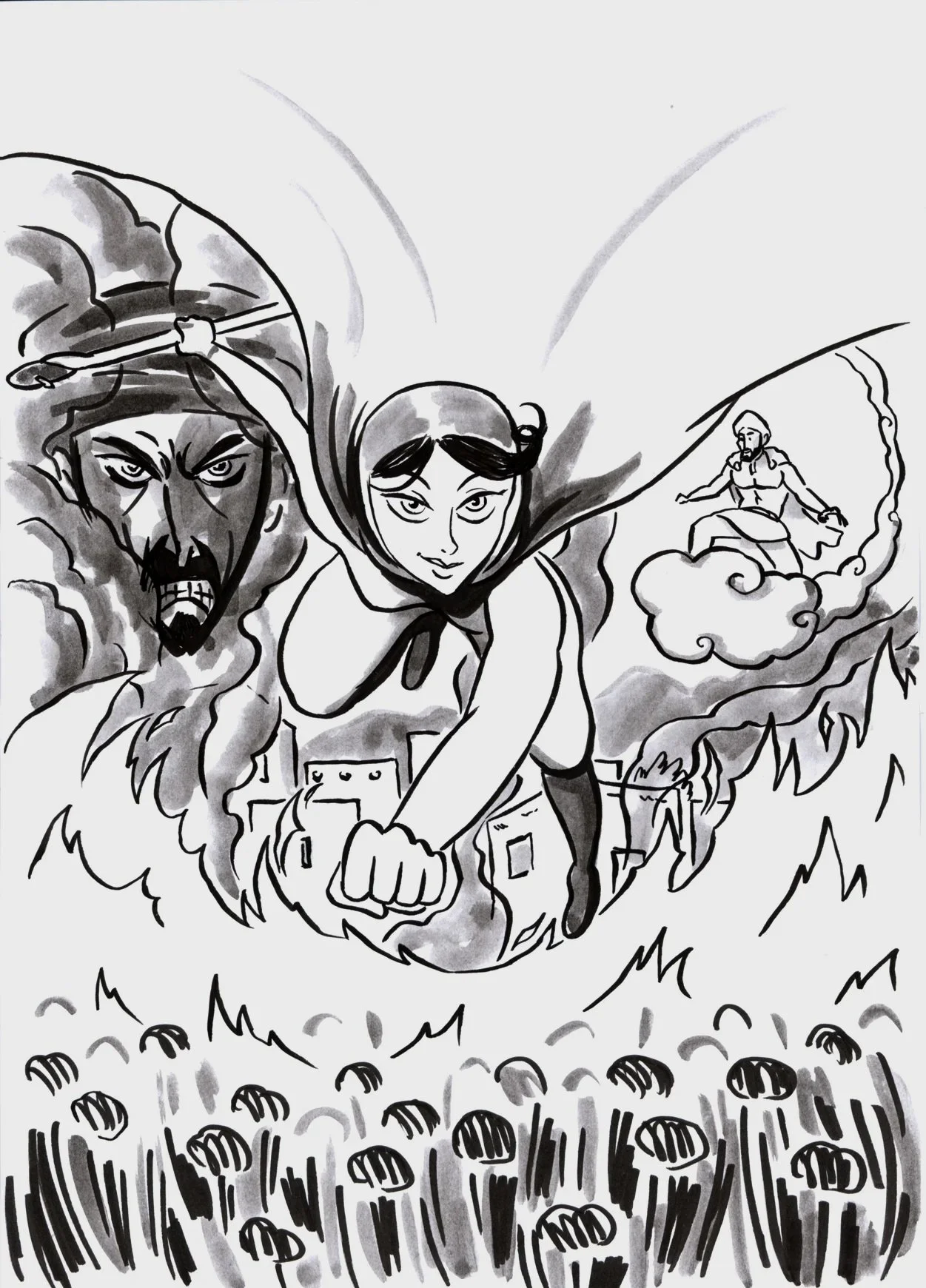
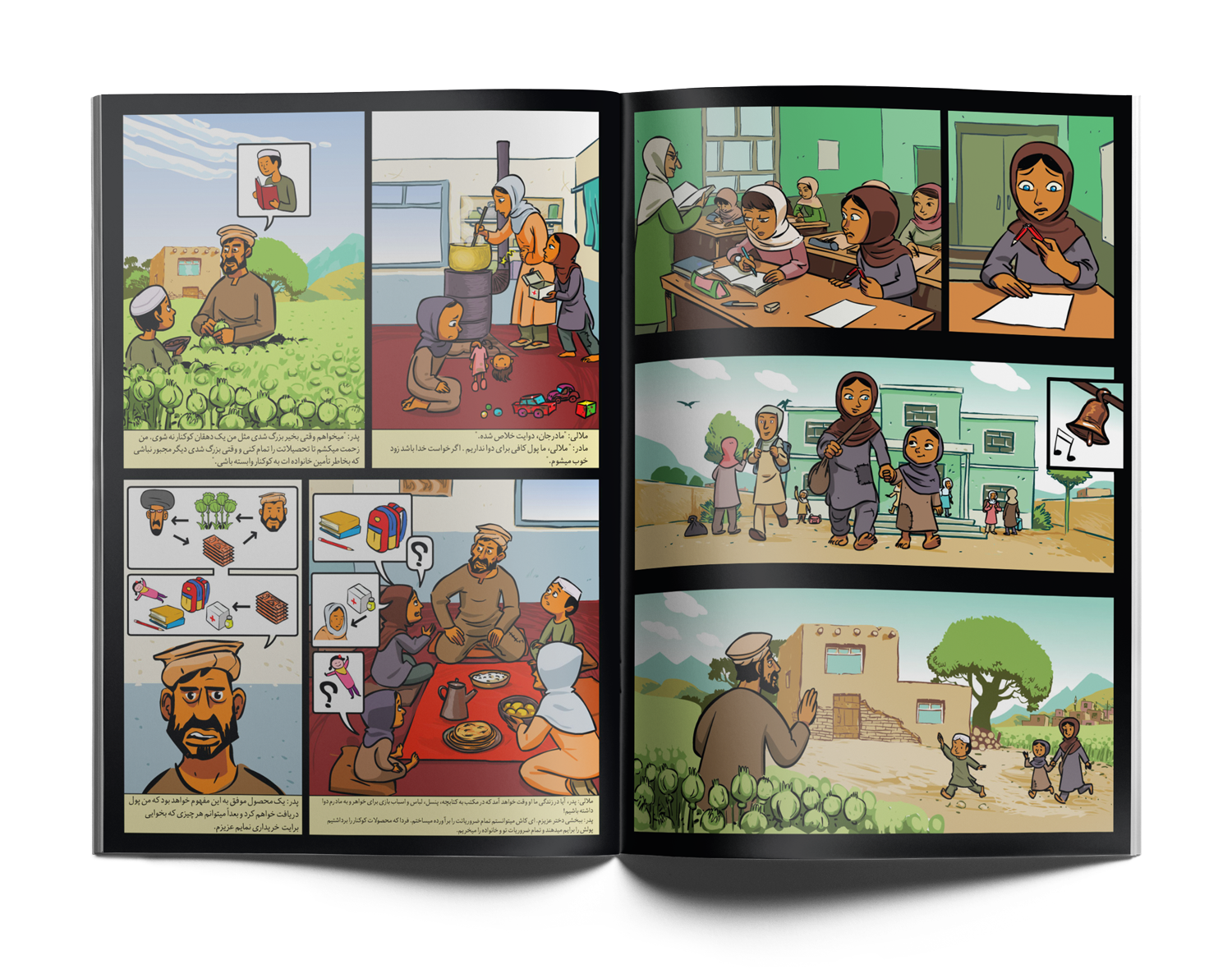
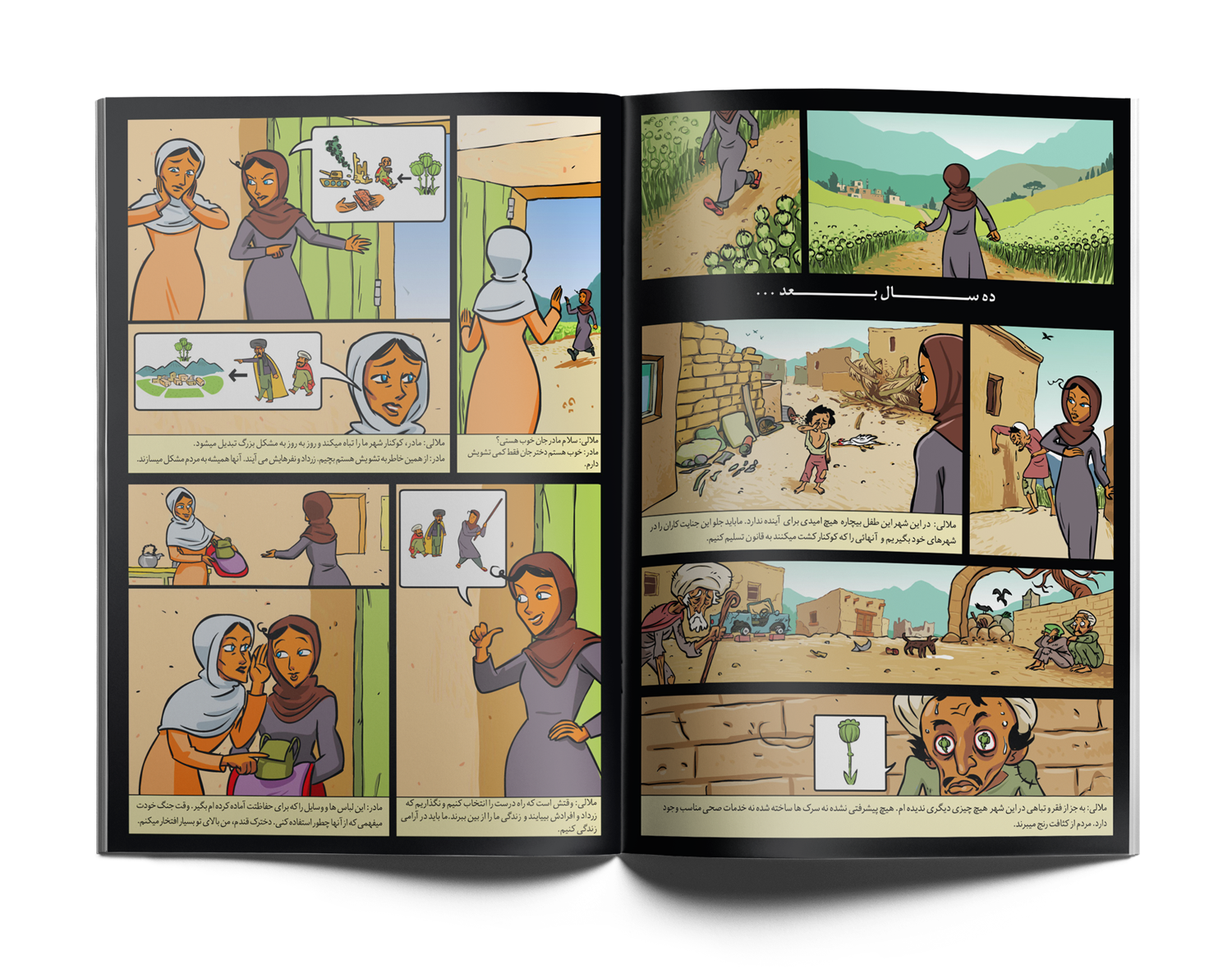
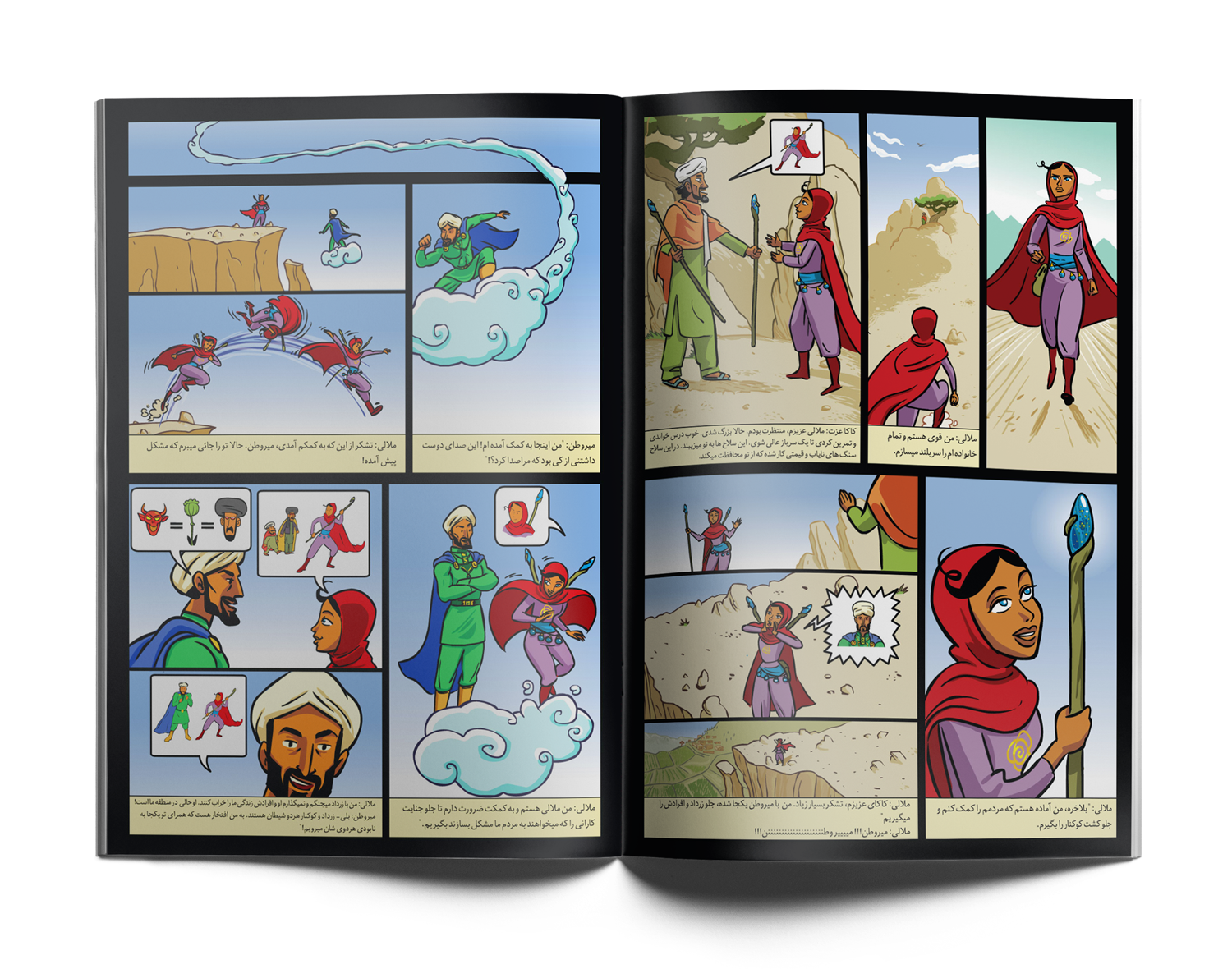
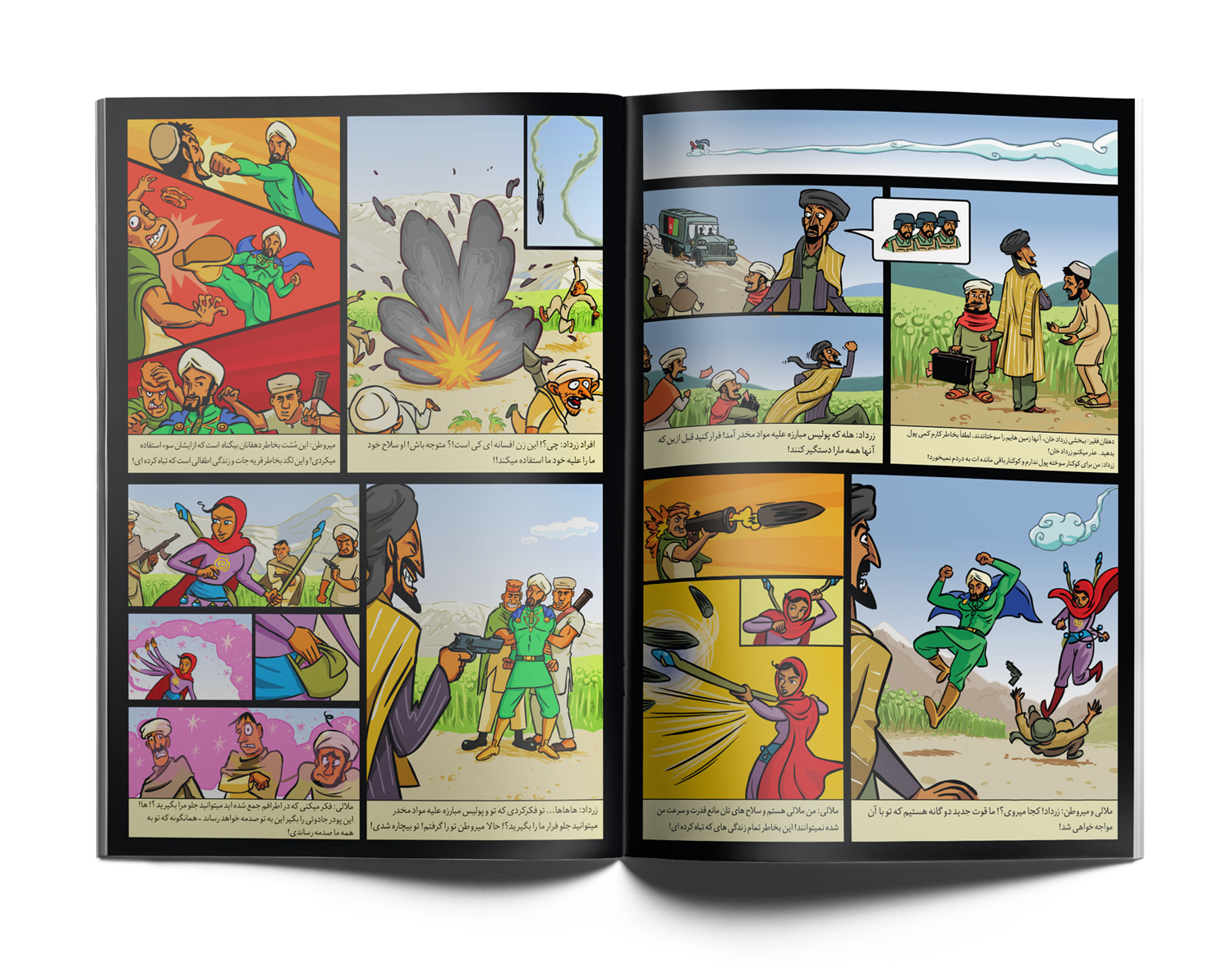
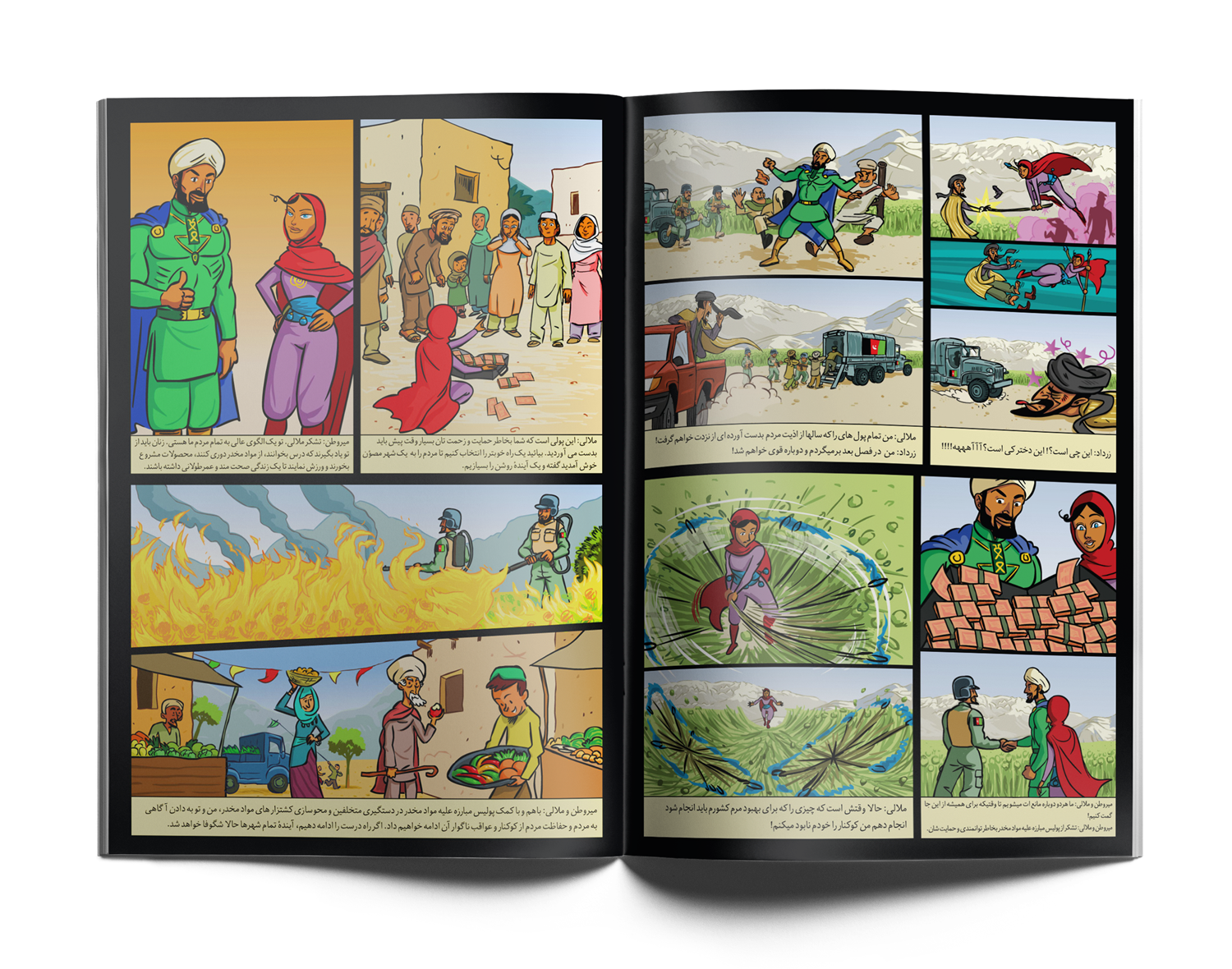
Comic books were an effective tool to engage and introduce stories that showed empowered young women and citizens like them, making better decisions to get onto or remain on “The Right Path”. The original comics however, included un-relatable characters such as a fictitious alien villain and an "Aladdin" stereotype, with no female characters. We decided to take the story in a more authentic direction, by eliminating certain characters in the first comic book and replacing them with characters that young readers could recognize in their lives, so the impact of the messaging was more effective. This was a point of concern for local ministers, religious experts and the institutions that approved the process. However in the end, the trusted that the new narrative allowed readers to decipher action vs attire and that children in particular, could differentiate a villain from a hero, by more than how they dressed. This risk paid off and its success led to the more bold and popular followup, the introduction of the first female afghan comic book superhero, “Malalai.”
2 MILLION COMICS DISTRIBUTED AMONGST AGRICULTURAL COMMUNITIES
+
2 MILLION COMICS DISTRIBUTED AMONGST AGRICULTURAL COMMUNITIES +
LAUNCH OF REGIONS FIRST FEMALE HEROINE
+
LAUNCH OF REGIONS FIRST FEMALE HEROINE +
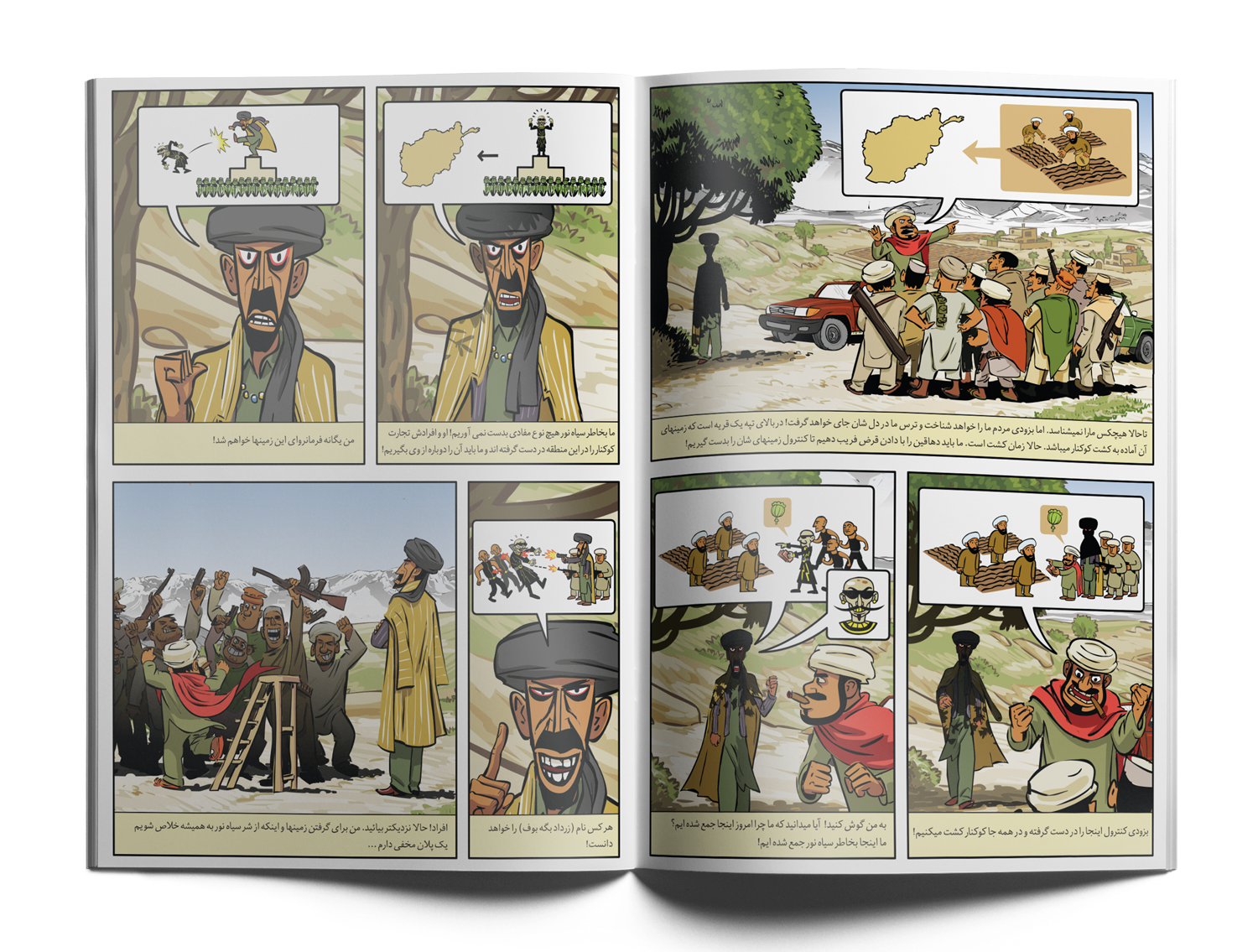
COMIC BOOK #1
Mir Watan : Adventures on The Right Path
To help drive the important messaging, we removed the alien villain and introduced the real life villains, drug lords, and we even killed the "Aladdin" type character, to introduce a new hero to inspire readers in the next comic. We also improved cover art and the quality of page layout.




REGION’S FIRST FEMALE HEROINE CHARACTER DEVELOPMENT

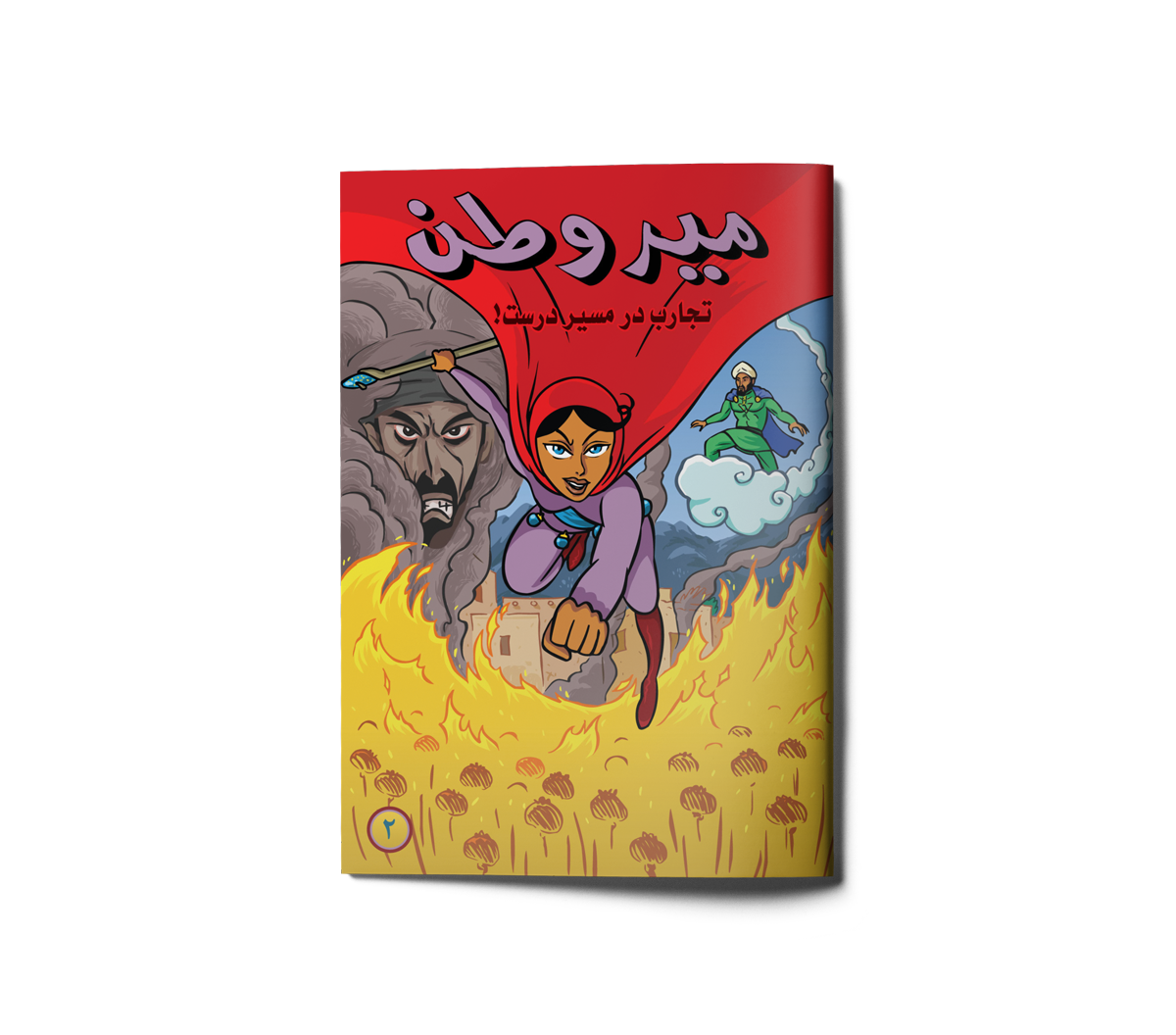
COMIC BOOK #2
Mir Watan : Adventures on The Right Path
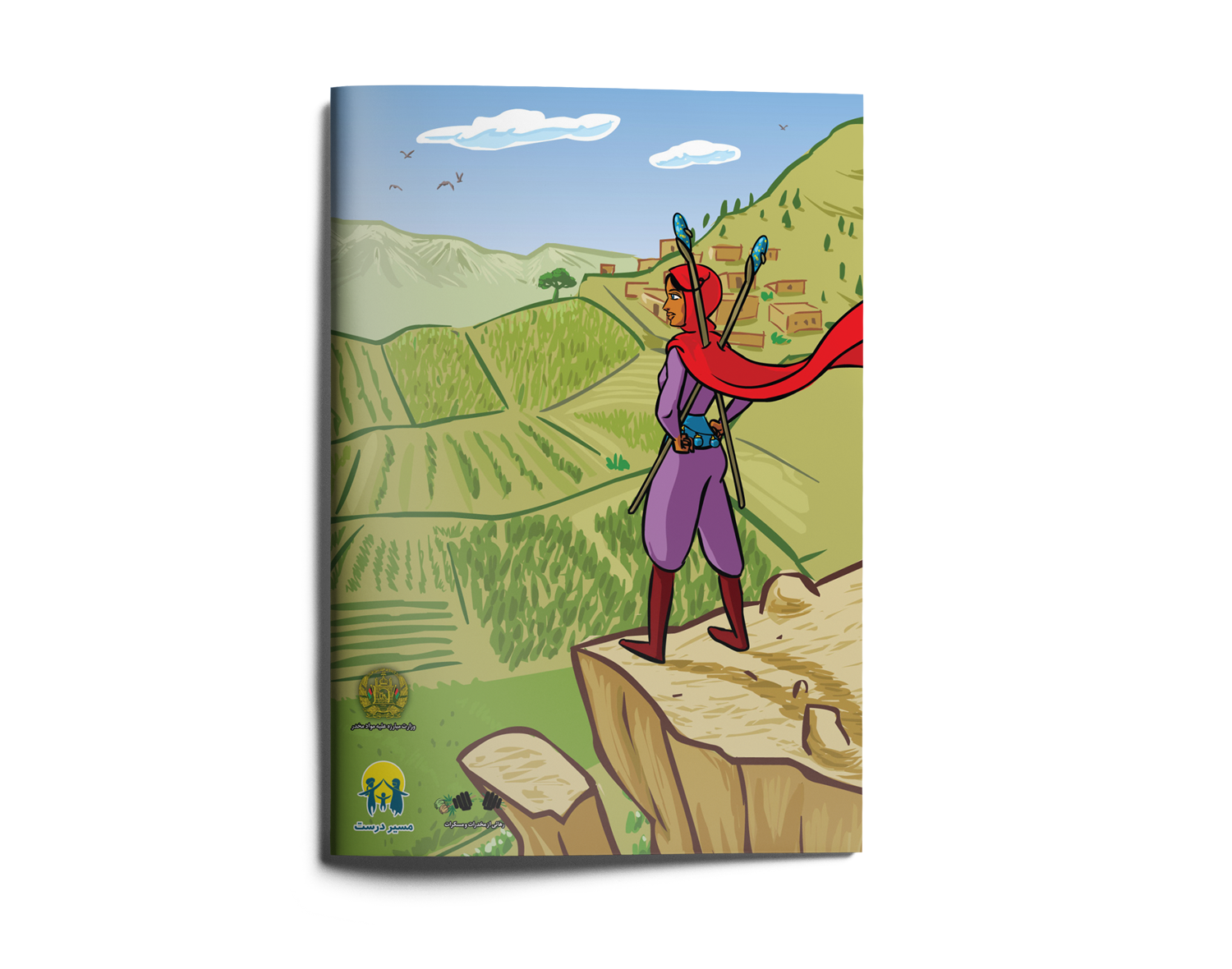
We wanted readers to truly be inspired by the comic stories. So we introduced a new hero, a heroine, a female character born in a rural village, who rises up to be a leader within her family, defeat the villain, and show the village that there is another way to make a living.
TELEVISON
A national broadcast talk show required improvement. We eliminated the live audience that caused unnecessary challenges, and introduced free text messaging for viewers at home to participate in Q&A segments. We also created a budget and format that allowed the team to conduct street interviews and destination coverage with inspiring leaders of the community. This included women operating their own small business, head of Kabul Police Department, and the Head of the Addiction Recovery Hospital - each special segment focused on a different key message.
BUILDING A SET FOR COMFORTABLE CONVERSATIONS
With a tight budget, we still found a way to rebuild the interview set to create a more comfortable experience for guests and use as an example for the local team to think more strategically and intentionally about set design.


MOBILE THEATER
Regional teams spread across Afghanistan were using actors to tell stories as a method for educating the public about "The Right Path" concepts. To support this existing system, and a need for targeted messaging that may emphasize different story points from village to village, we introduced a very economical interchangable set that was easy to print and ship locally. A lightweight fabric backdrop was easy to ship and replace if damaged, easy to adapt to their various locations, and allowed the actors to velcro on different elements as needed.


